
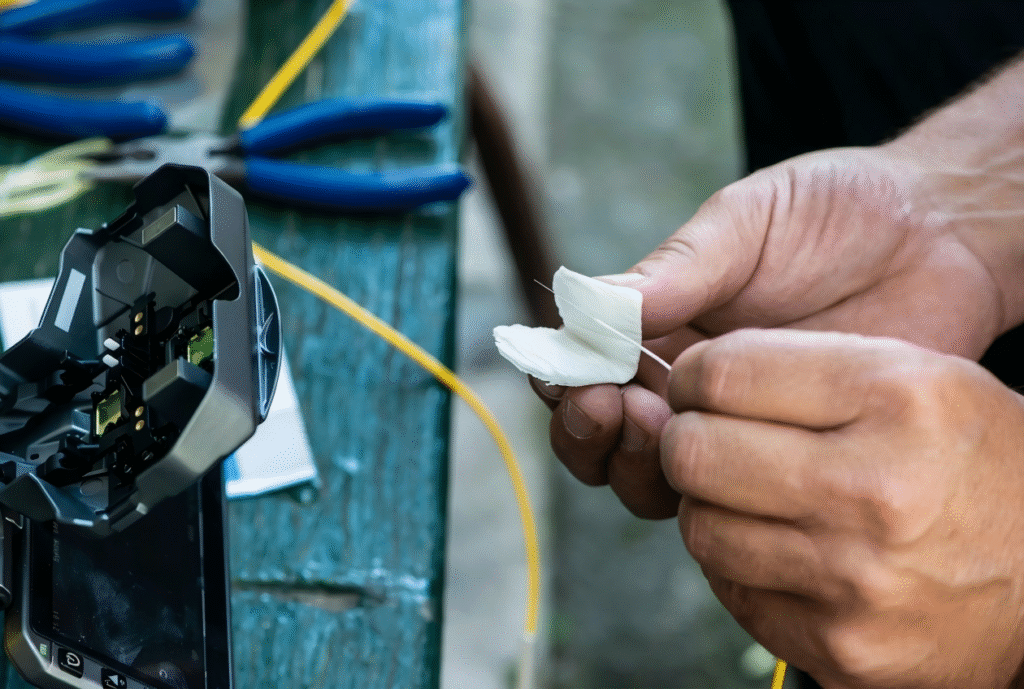
FTTH drop cable installation is often considered simple, but small mistakes during deployment can lead to signal loss, unstable service, and repeated maintenance visits.
In last-mile networks, drop cables are exposed to bending, tension, fixation pressure, outdoor weather, and building entry conditions. Many problems are not caused by cable quality itself, but by how the cable is routed, fixed, and protected during installation.
Understanding these common mistakes helps improve FTTH network reliability and reduce long-term maintenance costs.
Why FTTH Drop Cable Installation Quality Matters
A drop cable is usually the final connection between the distribution point and the subscriber.
Because this section is close to buildings, poles, walls, windows, and distribution boxes, it is often exposed to:
- Sharp turns
- Pulling force
- Cable tie pressure
- UV exposure
- Poor slack management
- Building entry friction
Even if the link passes testing after installation, poor routing or excessive stress may create problems later.
This is why FTTH drop cable installation should not be treated as a simple “last step” of the project.
Mistake 1: Excessive Bending Near Building Entry Points
One of the most common installation problems occurs near building entry points.
When a drop cable is sharply bent around a wall, window frame, conduit opening, or distribution box, the fiber may experience macrobending loss.
Macrobending happens when the cable is visibly bent beyond its recommended bend radius. This can increase attenuation and affect signal stability, especially at longer wavelengths.
A common field issue is that the cable passes initial testing, but the signal becomes unstable over time because the same stress point remains under constant bending.
Better practice:
- Use bend-insensitive fiber where required
- Maintain the recommended minimum bend radius
- Avoid sharp 90-degree turns
- Use proper routing accessories at wall entries
- Leave enough space for smooth cable transitions
Mistake 2: Over-Tightening Cable Ties or Clamps
Another common mistake is fixing the drop cable too tightly.
Over-tightened cable ties, clips, or clamps may compress the cable structure and create localized stress on the fiber.
Unlike macrobending, this type of problem is closer to microbending. Microbending is usually caused by pressure, compression, or small mechanical deformation rather than visible cable bending.
This can lead to increased attenuation and long-term reliability issues.
Better practice:
- Avoid tightening cable ties with excessive force
- Use suitable drop cable clamps
- Match the clamp type to flat or round drop cable
- Avoid metal edges or sharp fixing points
- Use gentle fixation methods where possible
The goal is to hold the cable securely without crushing the structure.
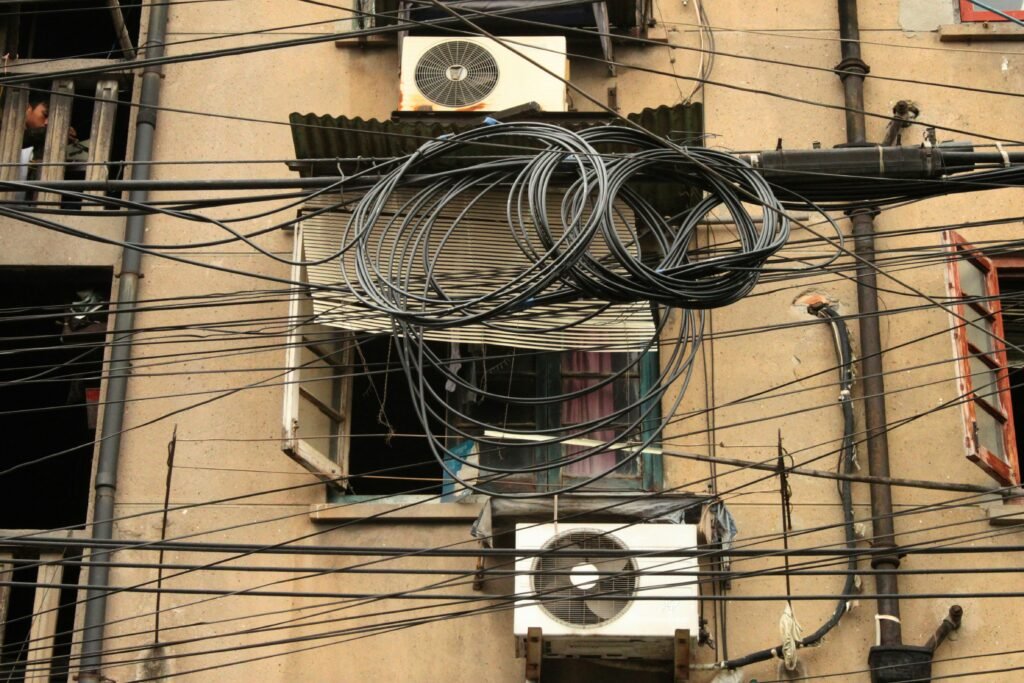
Mistake 3: Using Indoor Drop Cable in Outdoor Sections
Indoor drop cables are sometimes installed outdoors for short visible sections.
This may look acceptable during installation, but it can create long-term problems.
Outdoor sections are exposed to UV radiation, temperature changes, rain, wind, and mechanical abrasion. If the cable jacket is not designed for outdoor exposure, it may crack, harden, or degrade over time.
Not all LSZH jackets are suitable for outdoor use. Some LSZH drop cables are designed mainly for indoor flame-retardant applications, while outdoor drop cables require UV-resistant jacket materials according to project conditions.
Better practice:
- Use outdoor-rated drop cable for exposed routes
- Confirm UV resistance before outdoor installation
- Avoid using indoor-only LSZH cable outdoors
- Select PE, HDPE, UV-resistant LSZH, or other suitable jacket materials based on the project
- Protect exposed sections where needed
Cable jacket selection should match the actual installation environment.
Mistake 4: Poor Routing Inside Distribution Boxes
Distribution boxes, FAT boxes, and terminal boxes are frequent locations for installation-related problems.
Poor routing inside these boxes may create:
- Sharp bends
- Excessive slack
- Fiber compression
- Cable crossing
- Difficult maintenance access
In many cases, the cable itself is not defective. The issue comes from poor cable management inside the box.
Better practice:
- Keep routing paths clean and organized
- Avoid sharp bends inside the box
- Manage slack without forcing tight coils
- Keep enough space for future maintenance
- Avoid pressing the drop cable under other cables or accessories
Good cable management reduces signal risk and makes future troubleshooting easier.
Mistake 5: Excessive Pulling Tension During Installation
Drop cables are not designed for heavy pulling force.
During installation, excessive tension may stretch or stress the cable, especially when pulling through corners, conduits, or building entry points.
The problem may not appear immediately. The link may still pass basic testing, but internal stress can affect long-term stability.
Better practice:
- Pull the cable gently
- Avoid mechanical pulling unless allowed by cable design
- Do not pull around sharp corners
- Use proper guidance through conduits or wall entries
- Follow the cable’s tensile strength recommendations
Installation should protect both the cable jacket and the internal fiber structure.
Mistake 6: Poor Slack Management
Leaving too much slack can be as problematic as leaving too little.
Excessive slack may create unnecessary loops, sharp bends, or messy routing inside boxes. Too little slack makes future maintenance difficult and may place the cable under tension.
A good installation leaves enough slack for service and maintenance without creating stress points.
Better practice:
- Leave reasonable service slack
- Avoid tight coils
- Do not force cable loops into small spaces
- Keep slack organized inside boxes
- Make sure future maintenance access is possible
Slack management is a small detail, but it often affects long-term FTTH service quality.
Field Observation: Why Some Links Pass Testing but Fail Later
In many FTTH projects, installation problems do not always appear immediately.
A drop cable may pass initial power testing after installation. However, if the cable is sharply bent, over-tightened, exposed outdoors, or poorly routed, attenuation may increase over time.
Many maintenance calls are eventually traced back to small installation details rather than cable defects.
This is why successful FTTH deployment depends on both cable quality and installation quality.
Practical FTTH Drop Cable Installation Recommendations
To reduce common installation issues:
- Maintain the recommended bend radius
- Avoid sharp turns near entry points
- Use proper drop cable clamps
- Do not over-tighten cable ties
- Select outdoor-rated cables for outdoor sections
- Manage slack properly
- Avoid excessive pulling tension
- Protect cable at wall entries and exposed routes
- Keep distribution boxes clean and organized
These practices help reduce attenuation, service instability, and future maintenance work.
Key Takeways
- FTTH drop cable installation quality directly affects network performance.
- Tight visible bends can cause macrobending loss.
- Compression from cable ties or clamps may cause microbending-related attenuation.
- Outdoor routes require suitable UV-resistant jacket materials.
- Poor routing and slack management often lead to long-term maintenance problems.
- Many FTTH failures are related to installation details, not cable defects.
Frequently Asked Questions
What is the most common FTTH drop cable installation mistake?
Sharp bending near building entry points is one of the most common mistakes. It may cause macrobending loss and increase signal attenuation.
Can cable ties damage FTTH drop cables?
Yes. Over-tightened cable ties or clamps may compress the cable and create localized stress, which can increase attenuation.
Can indoor drop cable be used outdoors?
Indoor-only drop cable should not be used in exposed outdoor sections unless the jacket is rated for outdoor and UV-resistant applications.
Why does an FTTH link pass testing but fail later?
Some installation stress points may not cause immediate failure. Over time, bending, compression, UV exposure, or poor routing can increase attenuation and cause service instability.
Need Help Selecting the Right FTTH Drop Cable?
Different FTTH projects require different cable structures, jacket materials, and installation accessories.
If you are planning an outdoor, indoor-outdoor, aerial, or building-entry FTTH deployment, our team can help review your installation scenario and suggest suitable drop cable options.
Related Resources
- FTTH Deployment Solutions
- FTTH Drop Cable
- How to Choose Fiber Cable for Outdoor Networks
- Common Causes of Fiber Cable Failure in Outdoor Networks