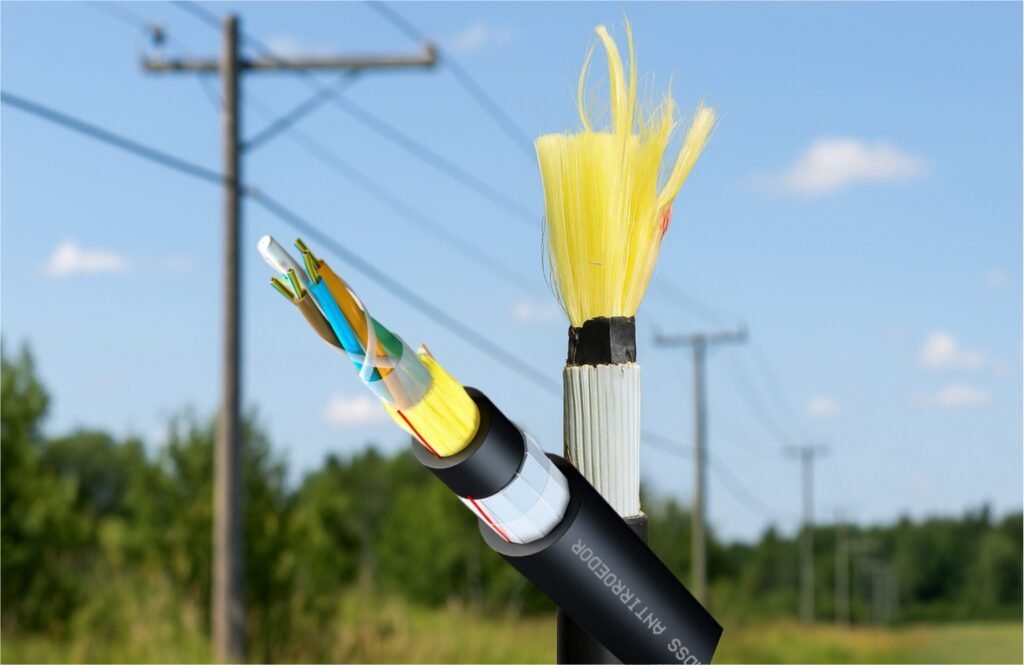
Anti-rodent ADSS fiber optic cables are designed for aerial fiber routes where cable damage caused by rodents or animal activity may become a long-term maintenance problem.
In some rural, agricultural or industrial environments, the issue is not always the optical fiber itself.
The problem often starts outside:
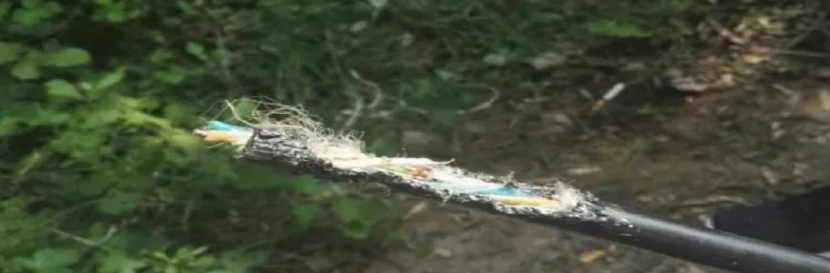
- rodents chewing the outer sheath
- animals climbing utility poles
- cable exposure near trees or rooftops
- repeated environmental stress over time
Even small jacket damage may gradually allow moisture or mechanical deterioration to affect the cable later.
Why Rodent Protection Matters in Aerial Fiber Networks
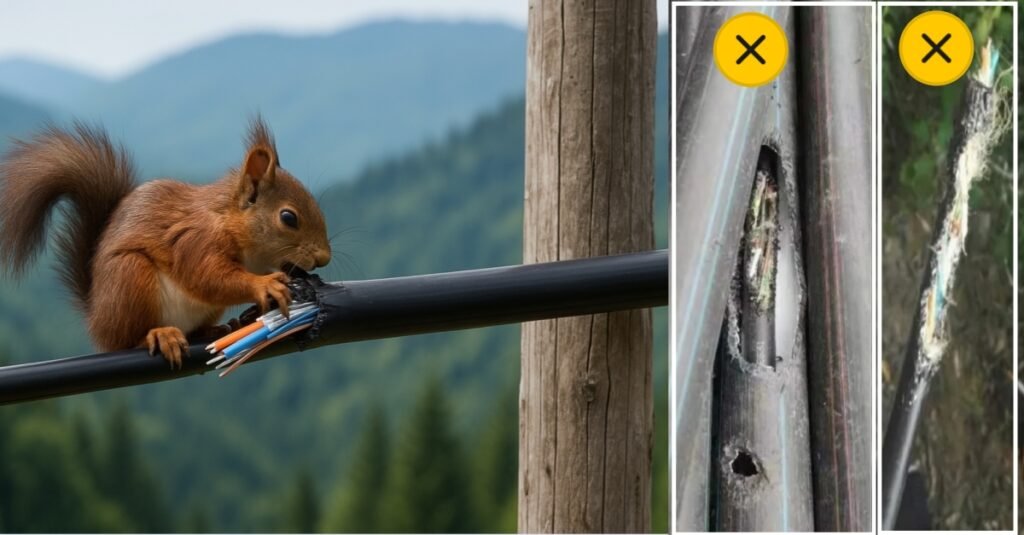
Many people associate rodent damage with underground cables.
However, aerial fiber routes can also be exposed to animal-related damage, especially in rural areas.
In some projects, animals may:
- climb poles
- access cables from nearby structures
- chew cable jackets
- build nests near hardware or anchor points
In agricultural or vegetation-heavy environments, these risks are more common than many operators initially expect.
Sometimes the network works normally during deployment,
but repeated damage to the outer sheath gradually creates long-term maintenance issues later.
Typical Causes of Rodent Damage
Common situations include:
- cable routes close to trees
- exposed cable sections near rooftops
- wildlife activity around utility poles
- insufficient sheath protection
- aging jackets in harsh outdoor environments
In many cases, the damage is not immediate fiber failure.
Instead, the outer sheath slowly deteriorates over time until mechanical or moisture-related problems begin appearing.
How Anti-Rodent ADSS Cable Improves Protection
Anti-rodent ADSS cables are designed to improve mechanical durability in environments exposed to animal activity.
Depending on the project, protection may include:
- reinforced HDPE outer sheath
- thicker jacket structure
- additional protective layers
- improved resistance to surface damage
- stronger mechanical protection around the cable core
The goal is not to make the cable “indestructible”.
The purpose is to reduce long-term maintenance risks in routes where standard aerial cable designs may age faster or become vulnerable to repeated damage.
Anti-Rodent ADSS Fiber Optic Cable Structure
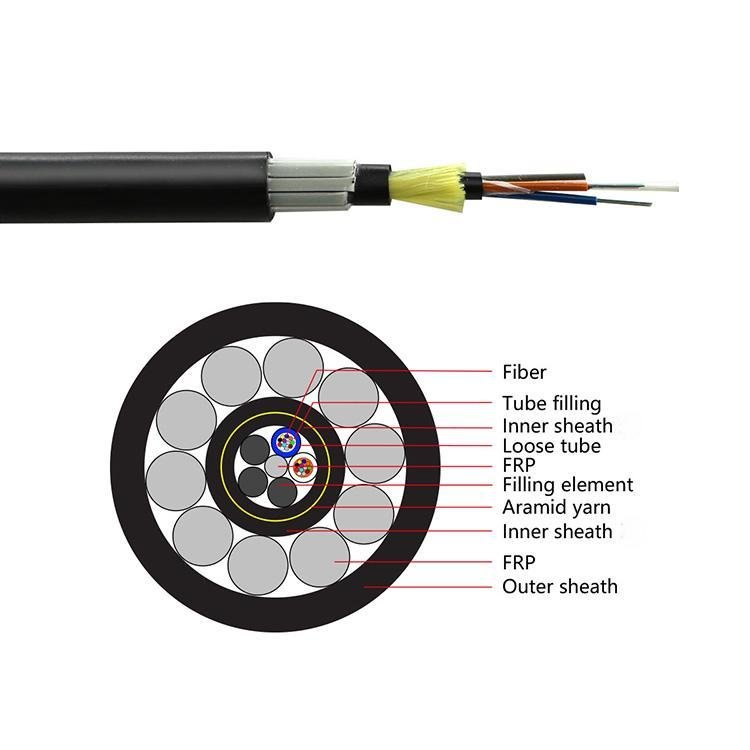
Rodent resistant ADSS cables improve protection through stronger materials and reinforced cable structures.
The design focuses on improving mechanical durability while maintaining the lightweight characteristics required for aerial installations.
- Reinforced HDPE outer sheath
- Additional protective layers
- Improved cable jacket thickness
- Enhanced mechanical strength
Typical Deployment Environments
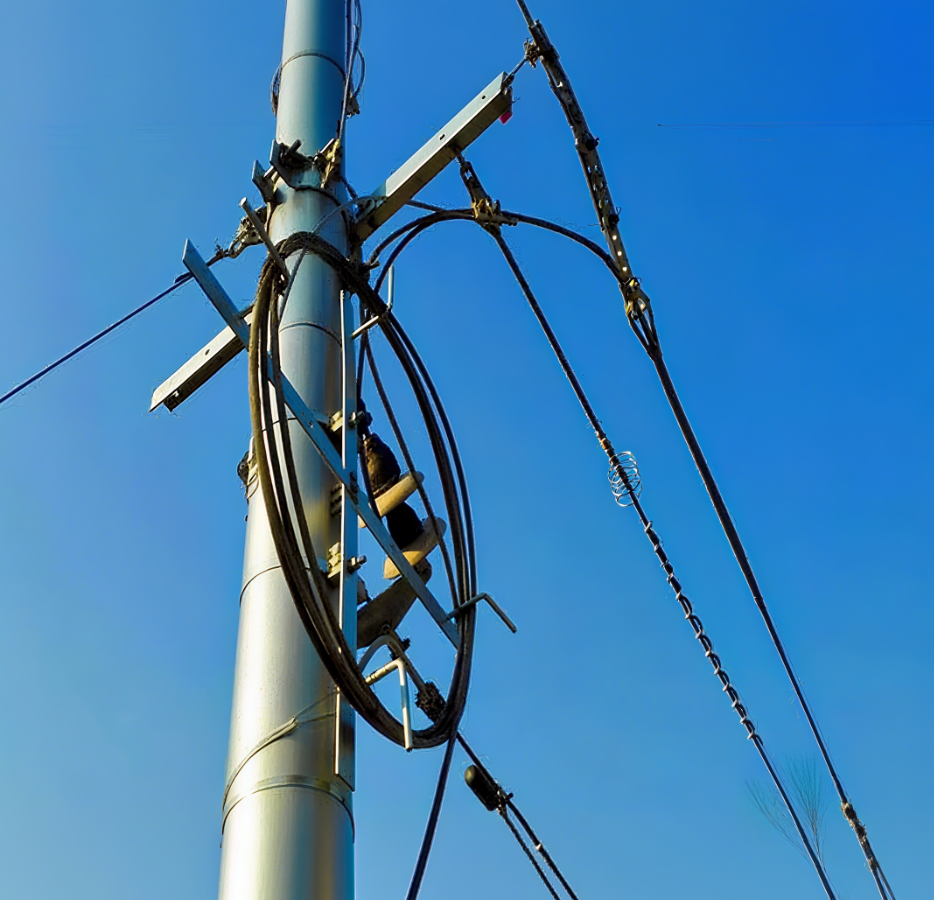
Anti-rodent ADSS cables are commonly used in:
- rural broadband networks
- agricultural areas
- industrial zones
- power utility communication routes
- vegetation-heavy aerial routes
- long-span rural fiber deployment
In some environments, rodent protection becomes more important than fiber count itself because maintenance access may be difficult after installation.
When Standard ADSS May Not Be Enough
Standard ADSS cables work well in many aerial installations.
However, in routes exposed to:
- animal activity
- severe outdoor aging
- strong UV exposure
- vegetation contact
- difficult maintenance access
a reinforced sheath structure may provide better long-term reliability.
In many rural projects, preventing repeated maintenance visits becomes more important than simply reducing initial cable cost.
Common Field Situations
Some common real-world situations include:
- cables installed near trees or vegetation
- animal activity around utility poles
- rooftop crossings in rural areas
- exposed spans in agricultural zones
- repeated jacket damage during seasonal changes
These problems may seem minor initially,
but they often become long-term maintenance headaches later.
What Determines Long-Term Durability
Long-term aerial cable stability depends on multiple factors working together.
Important considerations include:
- sheath material
- UV resistance
- cable routing
- span design
- vibration exposure
- environmental humidity
- wildlife activity
- installation quality
In many cases, the installation environment matters more than the cable specification alone.
Key Features of Anti-Rodent ADSS Fiber Cable
Typical features may include:
- reinforced outer sheath
- improved surface durability
- lightweight aerial structure
- suitable for pole-to-pole installation
- resistance to outdoor environmental exposure
- compatibility with long-span aerial deployment
Depending on the route conditions, different protection levels may be considered.
Common Mistakes During Cable Selection
Some projects underestimate environmental risks during the design stage.
Typical mistakes include:
- choosing cable only by price
- ignoring wildlife exposure
- using standard jackets in harsh rural environments
- routing cables too close to vegetation
- overlooking long-term maintenance difficulty
In many cases, the problem is not the fiber itself.
The issue is that the cable structure was not selected according to the actual installation environment.
FAQ
What is anti-rodent ADSS fiber cable?
It is an aerial ADSS fiber optic cable designed with reinforced protective structures to reduce the risk of jacket damage caused by rodents or animal activity.
Where are anti-rodent ADSS cables commonly used?
They are commonly used in rural fiber routes, agricultural areas, industrial environments and aerial installations exposed to wildlife activity.
What is the difference between standard ADSS and anti-rodent ADSS?
Anti-rodent ADSS cables typically include reinforced sheath structures or additional protective layers to improve durability in harsh outdoor environments.
Can rodent resistant ADSS cables be used for long spans?
Yes. They can be designed for different span requirements depending on route conditions and mechanical design.
Does anti-rodent protection completely prevent animal damage?
No cable can completely eliminate all environmental risks.
However, reinforced structures may help reduce maintenance frequency and improve long-term durability in exposed environments.
Discuss Your Aerial Fiber Deployment
Every aerial route has different environmental conditions.
Factors such as:
- wildlife exposure
- vegetation
- UV intensity
- span length
- maintenance access
- installation method
may all influence long-term cable performance.
If you are evaluating an aerial fiber project in a rural or wildlife-exposed environment, we can help review the installation scenario and suggest suitable cable structures based on the actual conditions.