
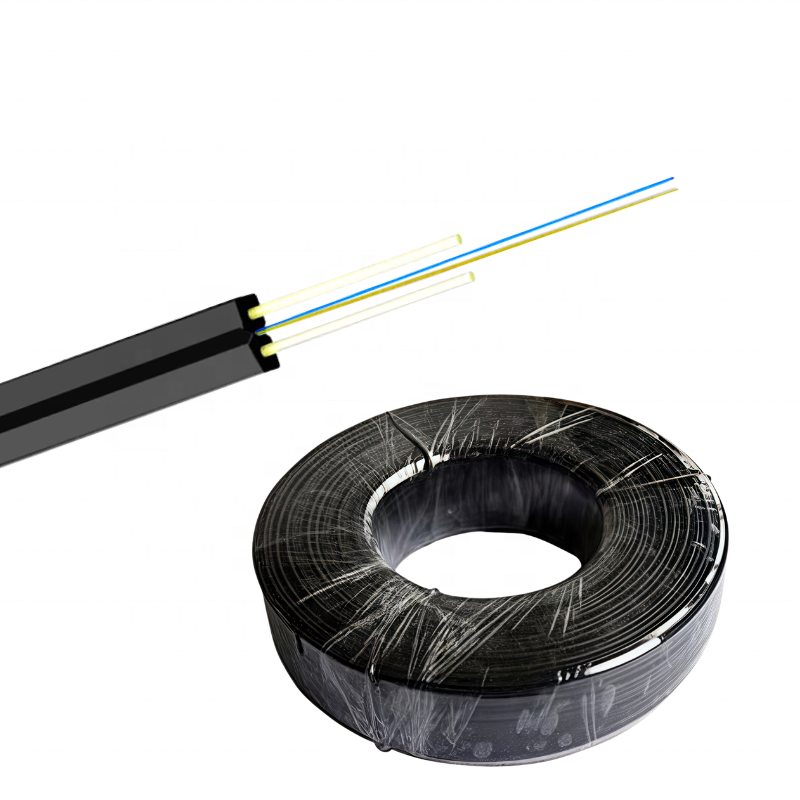
Drop cables are one of the most important components in FTTH deployments.
They represent the final connection between the distribution network and the subscriber, and although they are usually short in length, they directly affect:
- installation speed
- network stability
- long-term maintenance
- installation appearance
- overall deployment cost
In many FTTH projects, problems do not begin in the backbone network.
They begin in the last few meters.
Especially when the cable structure does not match the real installation environment.
What Is an FTTH Drop Cable?
A drop cable is the fiber optic cable used to connect the FTTH network to the end user.
It is commonly installed:
- from terminal boxes to homes
- between poles and buildings
- along exterior walls
- at building entry points
- inside indoor ducts or corridors
- in apartment buildings
In most residential FTTH deployments, G.657A2 fiber is commonly used because of its improved bending performance.
Not All Drop Cables Are the Same
One common mistake is assuming that any drop cable works in any environment.
In reality, long-term performance depends heavily on:
- installation type
- outdoor exposure
- bending conditions
- mechanical tension
- humidity
- UV exposure
- rodent risk
- installation speed requirements
That is why cable structure selection should normally match the actual deployment scenario.
Flat Drop Cable
Flat drop cable is one of the most common structures used in residential FTTH installations.
It typically includes:
- G.657A2 fiber
- FRP strength members
- LSZH or HDPE jacket
- lightweight and flexible structure
Typical advantages include:
- easy routing
- fast installation
- low visual impact
- good indoor adaptability
It is commonly used in:
- apartments
- urban buildings
- cable raceways
- indoor installations
- short façade routes
When Flat Drop Cable May Become a Problem
In many projects, flat drop cable performs well indoors.
However, in outdoor environments exposed to:
- strong sunlight
- humidity
- continuous tension
- wall friction
- wind movement
an indoor structure may deteriorate faster than expected.
Common problems may include:
- jacket cracking
- microbending
- gradual signal loss
- deformation near clips
- moisture ingress
In many cases, these problems appear months after installation.
Self-Supporting Drop Cable
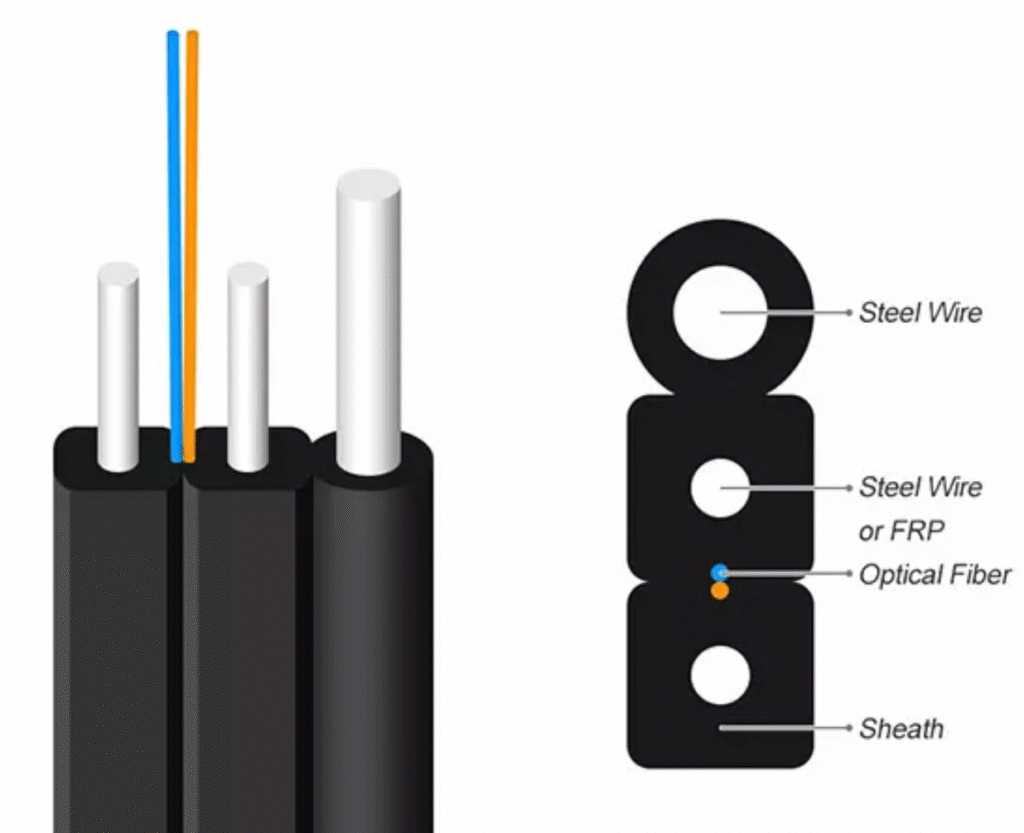
ISelf-supporting drop cable is commonly used in aerial FTTH connections between poles and buildings.
Depending on the design, it may include:
- steel messenger wire
- FRP support member
- figure-8 structure
- reinforced tensile elements
It is commonly used in:
- rural deployments
- short aerial spans
- fast FTTH rollouts
- pole-to-building installations
For spans above 30–50 meters or windy environments, structures with improved mechanical stability are usually preferred to reduce sag and cable movement.
Outdoor Round Drop Cable
In some outdoor installations, especially exposed routes, round HDPE drop cables are commonly used.
They usually provide:
- better UV resistance
- improved outdoor durability
- better moisture resistance
- stronger mechanical stability
They are commonly used in:
- outdoor façades
- courtyards
- rural routes
- exposed outdoor installations
In many cases, outdoor round drop cable offers better long-term durability than reusing indoor flat cable outdoors.
Reinforced or Anti-Rodent Drop Cable
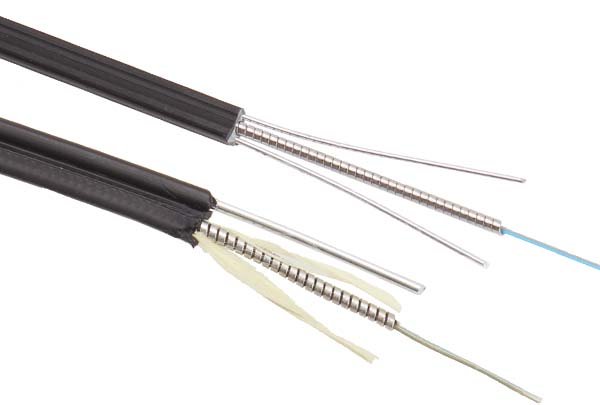
In agricultural areas or routes exposed to animal activity, some projects require additional protection.
Depending on the environment, the structure may include:
- reinforced jackets
- Nylon 12 outer sheath
- FRP reinforcement
- additional mechanical protection layers
The goal is not to make the cable “indestructible”.
The purpose is to reduce repeated maintenance and improve long-term network stability in harsher environments.
Pre-Connectorized Drop Cable
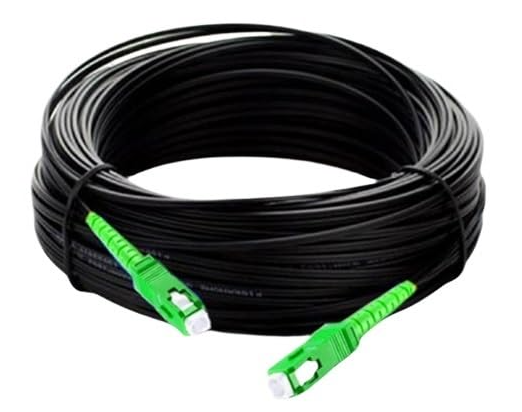
Pre-connectorized drop cable is supplied with factory-installed connectors, usually SC/APC or SC/UPC.
This helps:
- accelerate installation
- reduce field labor
- minimize connector termination errors
- simplify large-scale activations
It is commonly used in:
- rapid FTTH rollouts
- residential communities
- high-density projects
- standardized deployments
Difference Between Indoor and Outdoor Drop Cable
Not all drop cables are designed for outdoor exposure.
Indoor Cable
Indoor cables usually use LSZH jackets and are designed for protected indoor environments.
Outdoor Cable
Outdoor cables usually use HDPE jackets with improved UV and environmental resistance.
Using indoor cable outdoors may significantly reduce the service life of the installation.
Especially in:
- sun-exposed façades
- rooftop routes
- humid environments
- long outdoor runs
- building entry points
Common FTTH Installation Mistakes
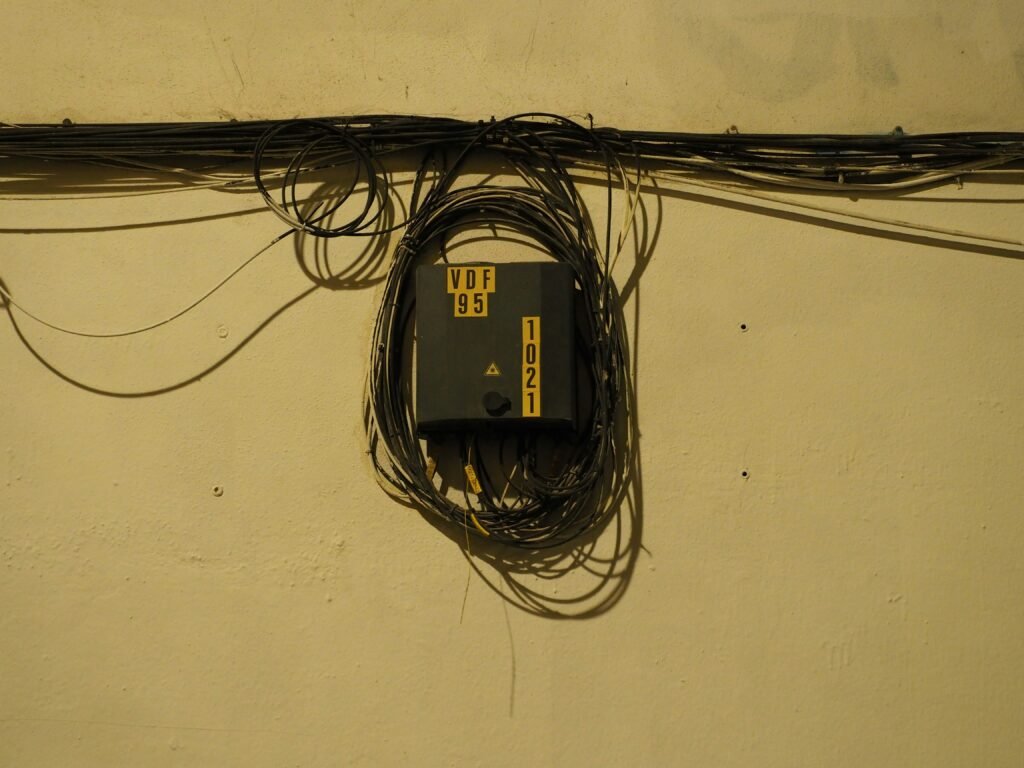
Common problems include:
- using indoor cable outdoors
- excessive bending
- overly tight clips
- incorrect clip spacing
- excessive pulling tension
- incompatible connectors
- poor protection at building entry points
In many cases, the network works normally at the beginning.
However, problems gradually appear later due to accumulated environmental and mechanical stress.
What Should Be Evaluated Before Choosing a Drop Cable?
Before selecting the cable structure, it is usually important to evaluate:
- indoor or outdoor use
- span or distance
- UV exposure
- humidity
- bending conditions
- installation speed
- wall or façade type
- rodent activity
- fixing method
- future maintenance difficulty
In FTTH deployments, small installation details often make a major difference in long-term network stability.
Typical FTTH Deployment Scenarios
Urban Buildings
Flat indoor drop cables are commonly used for compact indoor installations.
Rural Connections
Self-supporting or reinforced structures usually provide better outdoor performance.
Weather-Exposed Installations
HDPE outdoor structures generally provide better environmental resistance.
Fast Activation Projects
Pre-connectorized drop cable helps reduce installation time and field labor.
FAQ
What type of drop cable is commonly used in residential FTTH?
Flat drop cable with G.657A2 fiber is one of the most common solutions in residential FTTH installations.
Can drop cables be installed aerially?
Yes.Self-supporting structures are commonly used for pole-to-building connections.
When should reinforced or anti-rodent drop cable be considered?
Especially in rural, agricultural or mechanically exposed environments.
Can indoor cable be used outdoors?
It is generally not recommended.
UV exposure and humidity may rapidly deteriorate indoor-only cable structures.
Discuss Your Installation Scenario
Every FTTH deployment has different conditions.
Factors such as:
- façade type
- tension
- humidity
- UV exposure
- span length
- installation speed
- animal activity
- future maintenance
may directly affect long-term network stability.
If you are evaluating an FTTH project, we can help review the installation scenario and suggest more suitable drop cable structures based on the real deployment environment.