
Understanding OLT, ODN, Splitters and Last-Mile Fiber Deployment
Fiber to the Home (FTTH) networks deliver broadband connectivity directly to homes, apartments and commercial buildings through optical fiber infrastructure.
Compared with traditional copper-based access networks, FTTH provides:
- higher bandwidth
- lower latency
- better long-term scalability
- improved network stability
- easier future capacity upgrades
Today, FTTH is widely used in:
- urban broadband expansion
- residential communities
- rural internet projects
- smart buildings
- enterprise access networks
Understanding the relationship between OLT, ODN, splitters and drop cable infrastructure helps planners, contractors and integrators make better deployment decisions.
What Is an FTTH Network?
An FTTH network is an optical access network where fiber runs directly from the operator network to the subscriber premises.
Most modern FTTH deployments are based on Passive Optical Network (PON) architecture.
Common technologies include:
- GPON
- XGS-PON
- EPON
In many current deployments:
- GPON typically provides 2.5G downstream / 1.25G upstream
- XGS-PON supports 10G symmetrical transmission
The network architecture normally includes:
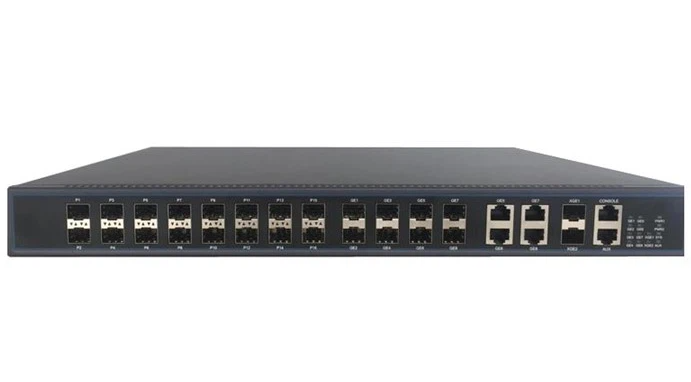
- OLT (Optical Line Terminal)
- ODN (Optical Distribution Network)
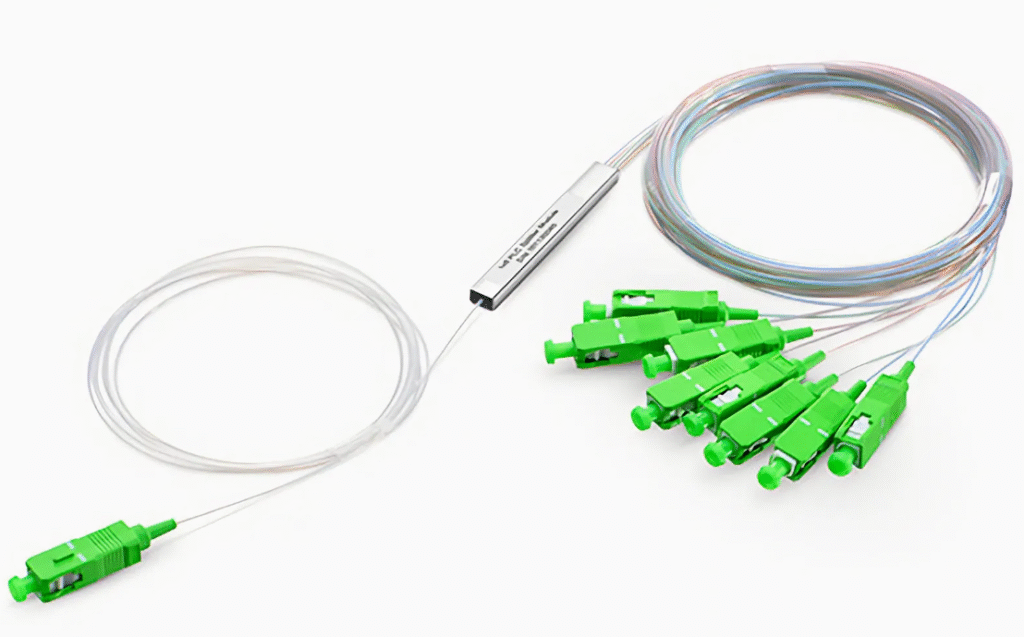
- optical splitters
- drop cable infrastructure
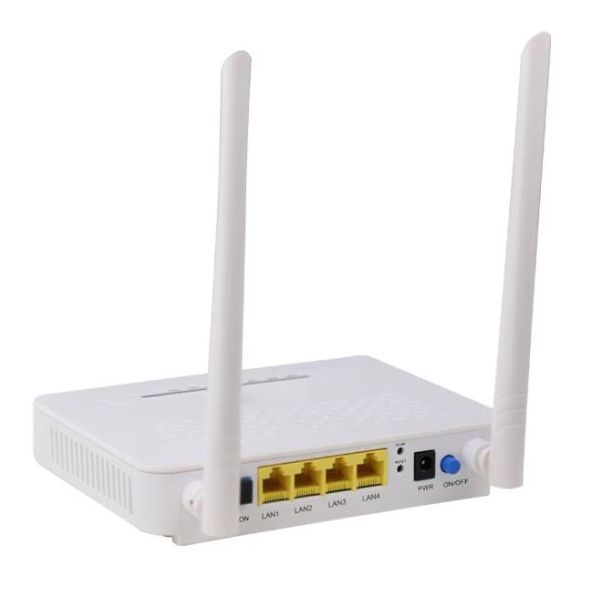
- ONT/ONU at subscriber side
Main Sections of an FTTH Network
A typical FTTH architecture can be divided into three main sections.
OLT / Central Office
The OLT is installed inside the operator central office or headend.
It manages subscriber connections and communicates with ONT/ONU devices in the field.
Typical functions include:
- bandwidth management
- subscriber authentication
- optical signal transmission
- traffic control
Depending on the network design, operators may deploy:
- GPON OLT
- XGS-PON OLT
- Combo PON systems for coexistence upgrades
ODN (Optical Distribution Network)
The ODN is the passive outside plant infrastructure connecting the OLT to end users.
This section usually includes:
- feeder cable
- distribution cable
- splitter cabinets
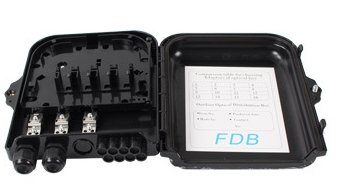
- fiber distribution terminals
- splice closures
- ducts or aerial routes
The ODN is often the most important part of long-term FTTH stability because many field failures originate from installation conditions rather than optical equipment itself.
Optical Splitters and Split Ratios
Optical splitters divide one optical signal into multiple subscriber connections.
Common split ratios include:
- 1:8
- 1:16
- 1:32
- 1:64
However, higher split ratios also increase optical loss.
Typical insertion loss values:
| Split Ratio | Typical Loss |
|---|---|
| 1:8 | ~10.5 dB |
| 1:16 | ~13.5 dB |
| 1:32 | ~16.5 dB |
| 1:64 | ~20–21 dB |
In long-distance FTTH deployments, splitter loss directly affects optical budget planning.
For this reason, splitter capacity should normally be evaluated together with:
- route distance
- connector loss
- splice loss
- future expansion requirements
Last-Mile Drop Section
The final section connects the distribution terminal to the subscriber premises.
This commonly includes:
- FTTH drop cable
- building entry cable
- façade installation
- indoor/outdoor transition
- pre-connectorized assemblies
In many FTTH projects, the last-mile section generates the highest number of maintenance issues because of:
- excessive bending
- outdoor exposure
- poor routing
- building entry stress
- incorrect cable selection
Common FTTH Deployment Methods
FTTH networks are commonly deployed through:
- aerial pole routes
- underground duct systems
- wall-mounted façade installations
- building riser systems
- microduct access networks
The appropriate method depends on:
- local infrastructure
- subscriber density
- installation cost
- maintenance accessibility
- environmental exposure
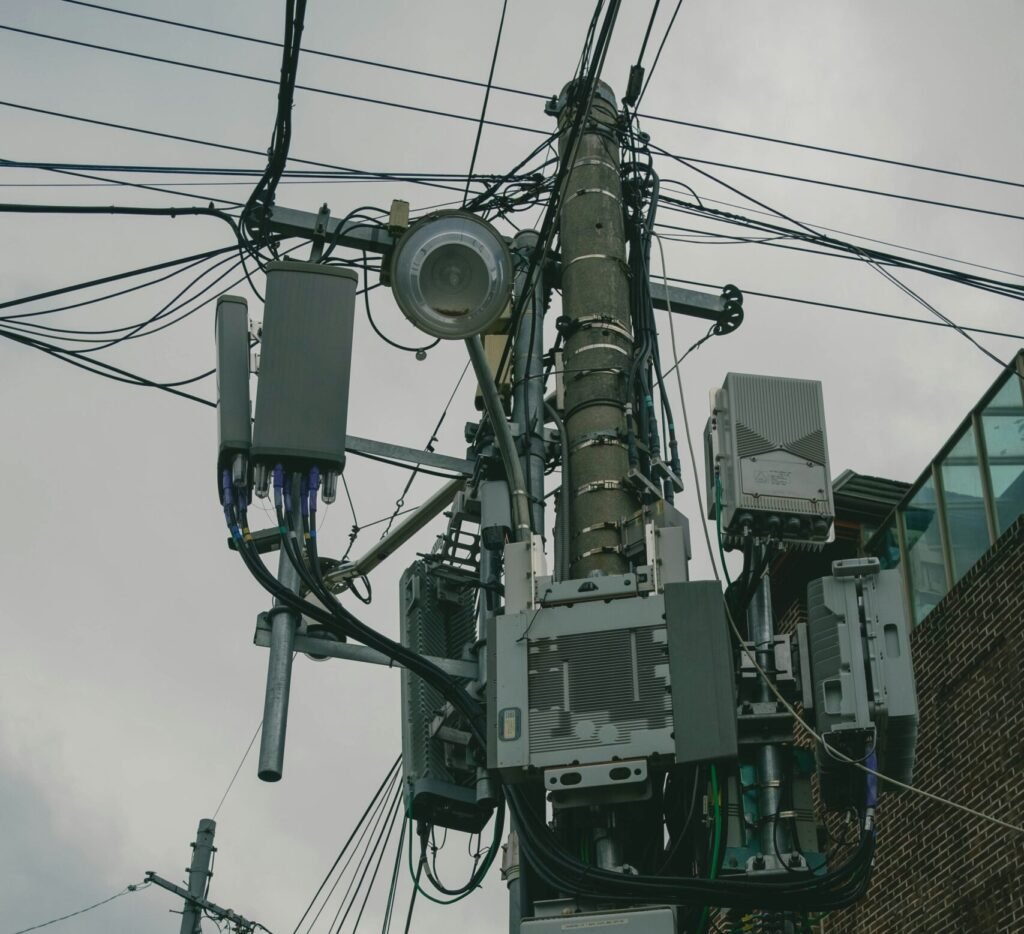
Aerial FTTH Deployment
In aerial deployments, operators commonly use:
- ADSS cable
- figure-8 cable
- self-supporting drop cable
Important considerations include:
- span length
- wind load
- vibration
- UV exposure
- pole conditions
In rural areas, reinforced or anti-rodent structures may improve long-term durability.
Underground FTTH Deployment
Underground installations typically use ducts or microduct systems.
Important factors include:
- pulling tension
- bend radius
- humidity
- duct congestion
- maintenance access
For long duct routes, water-blocking cable structures are often preferred to reduce moisture migration.
Building Entry and Indoor Installation
One of the most common FTTH failure points is the transition between outdoor and indoor environments.
Typical problems include:
- excessive bending radius
- poor sealing
- wall friction
- UV exposure near entry points
- indoor cable used outdoors
Most residential FTTH deployments use G.657A2 fiber because of its improved bending performance in tight installation environments.
Typical Planning Considerations
When designing FTTH networks, planners usually evaluate:
- subscriber density
- existing pole or duct infrastructure
- splitter architecture
- optical budget
- future expansion
- installation efficiency
- maintenance accessibility
- environmental conditions
In many deployments, reducing future maintenance becomes more important than minimizing initial cable cost.
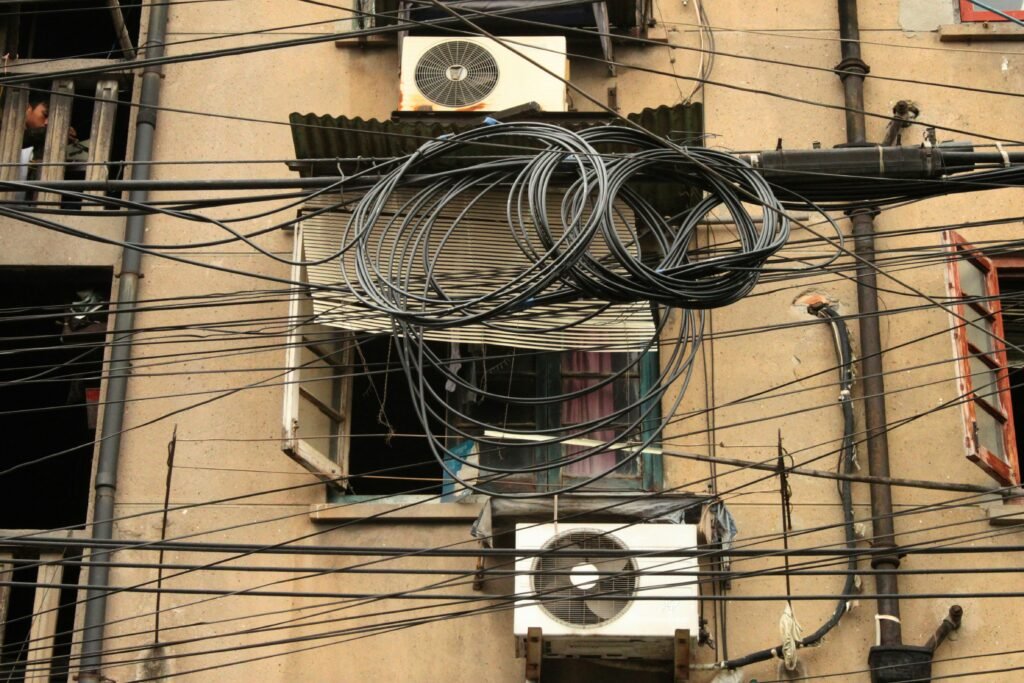
Common Field Challenges
Typical issues during FTTH rollout include:
- excessive bending
- incorrect splitter planning
- poor cable routing
- unclear labeling
- weak building entry protection
- excessive installation tension
- outdoor exposure of indoor cable
Many of these problems do not appear immediately after installation.
Instead, they gradually affect long-term network stability months later.
FAQ
What is the difference between FTTH and FTTB?
FTTH brings fiber directly into the subscriber home.
FTTB terminates fiber at the building, then uses internal cabling for individual units.
What cable is commonly used for FTTH last-mile deployment?
FTTH drop cable with G.657A2 fiber is commonly used for residential last-mile connections.
Why is optical budget important in FTTH?
Splitter loss, connector loss and fiber attenuation directly affect signal stability, especially in long-distance or high split-ratio networks.
Is FTTH suitable for rural broadband deployment?
Yes.
FTTH is widely used in both urban and rural broadband expansion projects, although rural deployments often require longer spans and more complex infrastructure planning.
Discuss Your FTTH Deployment Scenario
Every FTTH project has different conditions.
Factors such as:
- splitter architecture
- route distance
- aerial or duct installation
- environmental exposure
- maintenance accessibility
- subscriber density
may all affect long-term network performance.
If you are evaluating an FTTH rollout project, we can help review the deployment environment and suggest suitable fiber cable structures according to the actual installation conditions.