
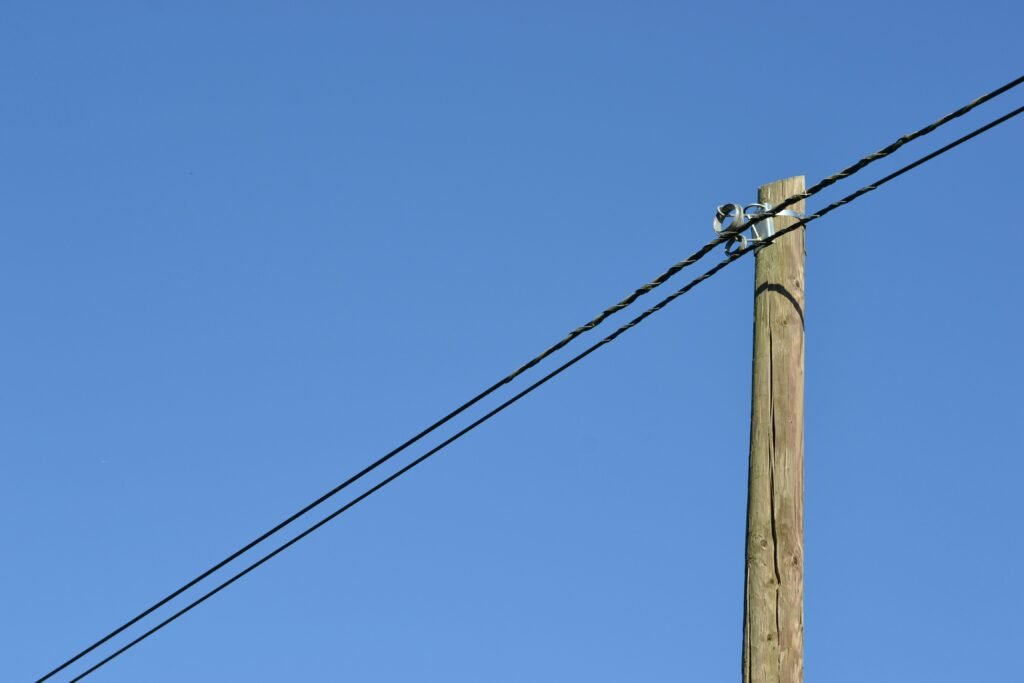
ADSS vs messenger supported cable is one of the most common decisions engineers face when planning aerial fiber optic deployments.
Both solutions are widely used for pole-to-pole installations, but they differ in load distribution, installation methods, maintenance requirements, and long-term performance.
Selecting the appropriate structure requires more than comparing fiber count. Environmental conditions, existing infrastructure, span length, and maintenance expectations all influence the decision.
What Is ADSS Fiber Cable?
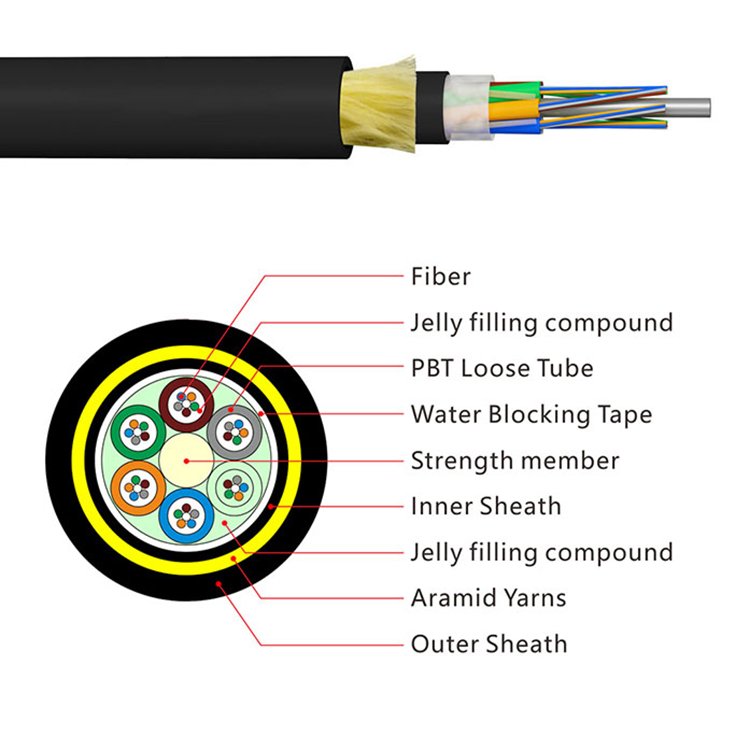
ADSS (All-Dielectric Self-Supporting) fiber cable carries mechanical load internally through dielectric strength members such as aramid yarns and FRP components.
Because the cable is self-supporting, no external messenger wire is required.
ADSS is commonly installed using suspension clamps and dead-end assemblies and is widely used in:
- Telecom networks
- Utility pole routes
- Rural broadband deployments
- Power utility communication networks
One of its key advantages is that it contains no metallic components, making it suitable for environments where electrical insulation is important.
What Is Messenger-Supported Fiber Cable?
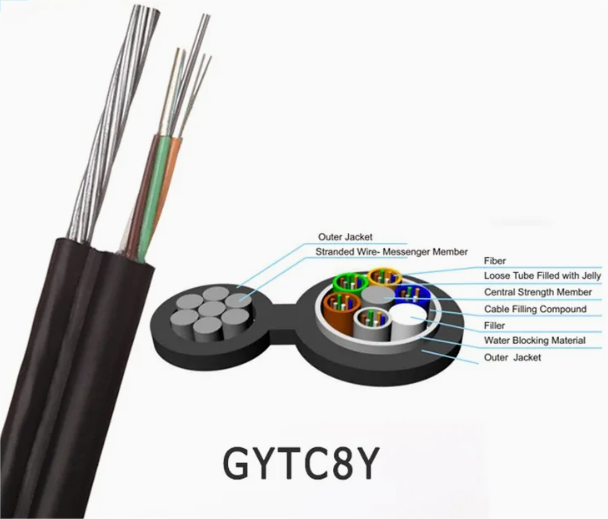
Messenger-supported systems use a steel messenger strand to carry the majority of the mechanical load.
The fiber cable may be:
- Lashed to an existing messenger wire
- Installed as a Figure-8 cable with an integrated messenger
In both cases, the steel support member carries most of the tension, reducing mechanical stress on the fiber cable itself.
Messenger-supported systems are commonly used where:
- Existing messenger infrastructure is available
- Long aerial spans are required
- Additional mechanical support is preferred
- Environmental loads are significant
Key Mechanical Differences
The fundamental difference lies in how mechanical load is managed.
ADSS
- Load carried internally by strength members
- No messenger strand required
- Lighter overall structure
- Requires careful tension and sag control
Messenger-Supported
- Load transferred to steel messenger strand
- Fiber cable experiences less direct tension
- Greater tolerance to installation variation
- Often preferred where additional mechanical support is needed
Neither solution is universally better. Performance depends on installation conditions and design requirements.
What Often Determines the Choice in Practice?
Understanding the differences between ADSS vs messenger supported cable systems helps engineers make better deployment decisions.In real projects, the decision is rarely based on span length alone.
Engineers typically evaluate:
- Existing infrastructure
- Pole conditions
- Environmental loading
- Utility requirements
- Installation resources
- Maintenance expectations
- Project budget
For example:
If a route already includes messenger wire, attaching a fiber cable to the existing support system may be the most practical and economical solution.
In a new deployment without messenger infrastructure, ADSS often reduces installation complexity because only one cable system needs to be installed.
A Common Engineering Question
Should engineers select a cable based primarily on span length?
Not always.
While span length is an important consideration, installation conditions, existing infrastructure, maintenance requirements, and utility constraints often have a greater impact on long-term performance.
For example, a route with existing messenger infrastructure may be more efficiently upgraded using a messenger-supported system, even if ADSS is technically feasible.
Likewise, a new deployment without messenger wire may benefit from the simpler installation process offered by ADSS.
For this reason, aerial cable selection is usually based on the overall route environment rather than a single design parameter.
Installation Considerations
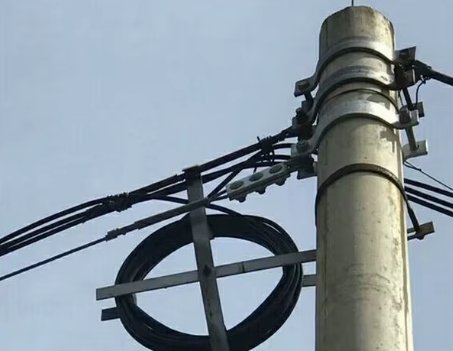
ADSS Installation
ADSS installations require careful control of:
- Installation tension
- Sag
- Span loading
- Clamp selection
Improper hardware matching or excessive tension may increase long-term mechanical stress.
Because ADSS relies on internal strength members, installation quality has a direct impact on long-term performance.
Messenger-Supported Installation
Messenger-supported systems generally offer greater installation tolerance because mechanical load is largely separated from the fiber cable.
However, they usually require:
- Messenger installation or verification
- Additional hardware
- Cable lashing or attachment
- Grounding considerations where applicable
This often results in a more complex installation process.
Long-Term Performance Considerations
Long-term reliability is another important factor.
In many environments, both solutions can perform successfully for years when properly designed and installed.
However, engineers often evaluate different long-term risks.
ADSS Considerations
For ADSS deployments, attention is typically given to:
- Environmental loading
- Sag performance
- Long-term stress on strength members
- Hardware compatibility
- Utility corridor requirements
Messenger-Supported Considerations
For messenger-supported systems, engineers often monitor:
- Messenger corrosion
- Hardware condition
- Attachment integrity
- Grounding and bonding requirements
The most suitable solution depends on the specific operating environment rather than a single performance characteristic.
ADSS Near Power Utility Infrastructure
One of the reasons ADSS is widely used in utility communication networks is its dielectric construction.
Because the cable contains no metallic messenger strand, it can be suitable for many utility pole applications where electrical isolation is important.
However, when ADSS is installed near medium- or high-voltage infrastructure, environmental electrical conditions should be evaluated carefully during project design.
In some situations, specialized jacket designs may be specified to improve long-term performance.
Cable selection should always follow local utility requirements and engineering guidelines.
When to Choose ADSS
ADSS is often selected when:
- No messenger infrastructure exists
- A lightweight solution is preferred
- Electrical isolation is important
- Installation simplicity is desired
- Utility pole sharing is involved
ADSS is commonly used for telecom expansion, rural broadband projects, and utility communication networks.
When to Choose Messenger-Supported Cable
Messenger-supported systems are often selected when:
- Existing messenger wire is available
- Additional mechanical support is preferred
- Long aerial routes are involved
- Environmental loading is significant
- Maintenance teams are familiar with messenger systems
Where suitable messenger infrastructure already exists, messenger-supported deployment can be a highly cost-effective option.
Common Selection Mistakes
One common mistake is selecting a cable based only on fiber count.
Another is assuming that longer spans automatically require one specific cable type.
In practice, successful aerial deployments depend on evaluating:
- Route conditions
- Existing infrastructure
- Installation capability
- Maintenance requirements
- Environmental loading
Many long-term performance issues originate from mismatched installation conditions rather than the cable structure itself.
Practical Field Observations
In many successful deployments, both ADSS and messenger-supported systems perform reliably when matched to the route conditions.
Projects often achieve better results when engineers focus on the overall installation environment rather than searching for a universally “stronger” solution.
The most effective choice is usually the one that best fits the infrastructure, maintenance strategy, and operational requirements of the network.
Key Takeaways
The choice between ADSS vs messenger supported cable structures depends on route conditions rather than a single performance factor.
- ADSS carries mechanical load internally through strength members.
- Messenger-supported systems transfer load to an external steel support strand.
- Existing infrastructure often influences the decision more than span length alone.
- ADSS can simplify new installations where no messenger exists.
- Messenger-supported systems can be advantageous where support infrastructure is already available.
- Long-term performance depends on installation quality, environmental conditions, and maintenance practices.
Frequently Asked Questions
Is ADSS always the best choice for aerial fiber deployment?
No. The most suitable solution depends on infrastructure, environmental conditions, installation requirements, and long-term maintenance considerations.
Can existing messenger wire be reused?
In many cases, yes. If the messenger remains structurally suitable, attaching a fiber cable may reduce installation cost and deployment time.
Which option is easier to install?
ADSS generally requires fewer components, while messenger-supported systems may involve additional installation steps. The actual complexity depends on project conditions.
What is the most common mistake when selecting aerial fiber cable?
Selecting a cable based only on fiber count or span length without evaluating route conditions, infrastructure, and environmental loading.
Need Help Choosing Between ADSS and Messenger-Supported Cable?
Every aerial route has different requirements.
If you are evaluating a telecom, utility, rural broadband, or OSP deployment, our team can help review the installation scenario and suggest suitable cable structures based on the project conditions.