
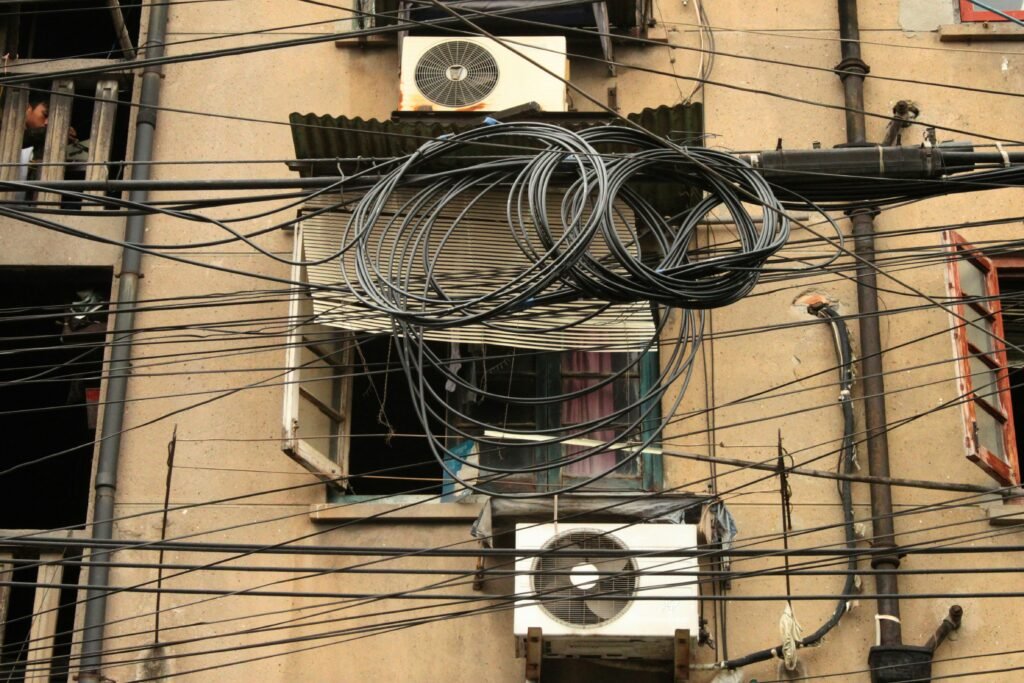
In many FTTH projects, the main cable is usually not the first thing that fails.
The backbone is installed correctly.
Optical levels look normal.
The project passes acceptance.
But after a few months, small problems begin to appear.
- Sometimes the signal becomes unstable only at certain hours.
- Sometimes customers report intermittent disconnections
- In humid regions, problems may appear more frequently after rain.
And in many cases, the real problem is not in the main fiber route.
It starts much closer to the user — Common FTTH Problems at Building Entry Points
Why the Last Few Meters Matter More Than Expected
In many installations, the transition between outdoor and indoor routing is treated as a minor detail.
The difficult aerial or duct section is already completed.
The signal already works.
The installation team wants to finish quickly.
As a result, the last few meters are often installed with less attention.
But this small area is where multiple stress factors combine:
- tight bending near walls or corners
- pressure from windows or furniture
- repeated pulling during daily use
- humidity entering through unsealed openings
- indoor cable exposed to outdoor conditions
- excessive tension during routing
At the beginning, everything may still function normally.
The problem is that many FTTH failures in these areas develop gradually, not immediately.
Humidity Is One of the Most Common Hidden Causes
In tropical and coastal environments, humidity becomes a major long-term risk.
Even a small opening near the building entry point can slowly allow moisture to enter.
At first, there may be no visible issue.
Months later, attenuation begins increasing.
Connectors become unstable.
Intermittent optical loss starts appearing.
In many cases, troubleshooting initially focuses on active equipment such as:
- OLT
- ONU
- power supply
- patch cords
But the real issue may still be located near the cable entry point.
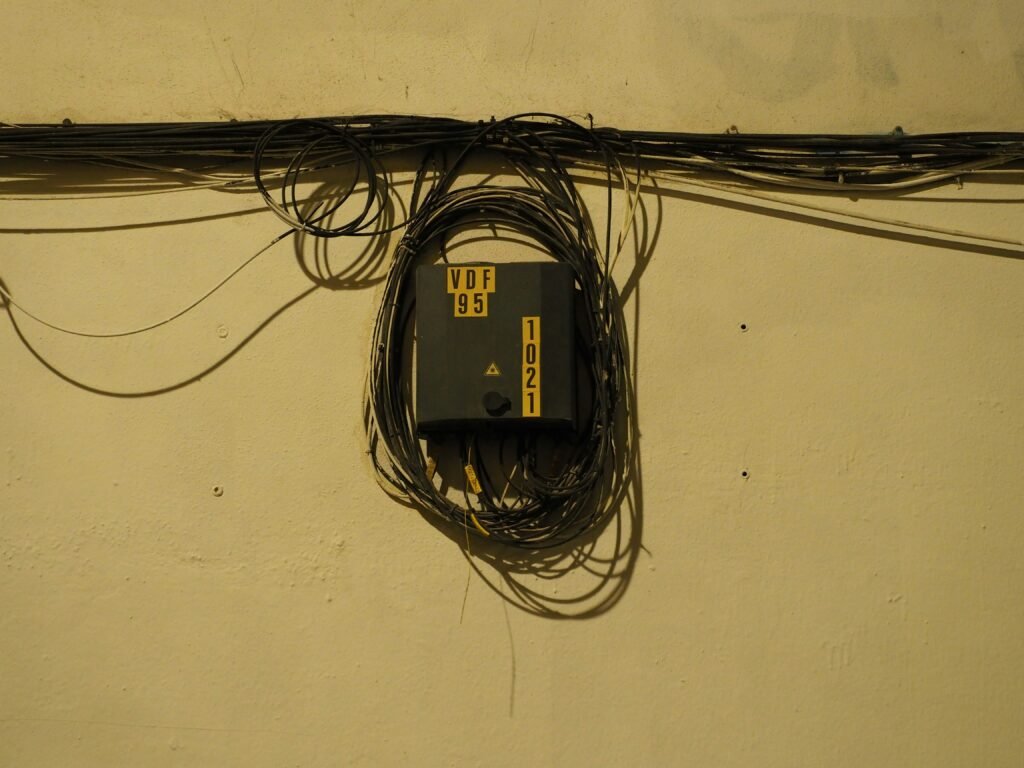
Excessive Bending Can Slowly Affect Stability
Another common issue is excessive bending in indoor routing.
Installers often try to keep the cable visually clean by forcing small bends near corners, windows or wall edges.
The network may still pass initial testing successfully.
However, long-term stress caused by tight bending can gradually affect signal performance, especially at higher wavelengths.
Because the issue develops slowly, it is often difficult to identify later.
Indoor Cable Used Outdoors
This is another common mistake in smaller FTTH deployments.
In some projects, indoor drop cable is extended into outdoor areas exposed to:
- UV radiation
- rain
- temperature variation
- humidity
The cable may still work during installation and initial acceptance.
But over time, the external environment slowly affects the jacket and internal stability.
In many cases, the cable itself is not defective.
The real issue is that the cable type does not match the installation environment.
Long-Term FTTH Stability Usually Depends on Small Details
In many successful installations, the difference is not necessarily a more expensive cable.
The difference often comes from installation details such as:
- proper bending radius
- suitable cable selection
- humidity protection
- reducing long-term pressure points
- avoiding unnecessary tension
- improving indoor-outdoor transition protection
These decisions may seem small during deployment.
But they often determine long-term network stability.
Final thought
Many FTTH problems do not begin in the core network.
They begin quietly at the transition between outdoor and indoor installation.
Because everything works normally at the beginning, these details are easy to overlook.
But in real-world deployments, the last few meters often matter more than expected.
If your team is working on FTTH installations in humid, high-density or space-limited environments, reviewing these transition details early can help reduce long-term instability later.
FAQ
Can humidity affect FTTH cables?
Yes. Humidity entering through poorly sealed building entry points can gradually affect connectors and signal stability over time.
What happens if a fiber cable bends too much?
Excessive bending can create long-term signal instability and increased attenuation, especially in indoor routing areas.
Is indoor FTTH cable suitable for outdoor installation?
Generally, indoor cable should not be exposed to outdoor environments with UV, rain or large temperature changes.
Why do FTTH problems sometimes appear months later?
Many installation-related issues develop gradually due to humidity, tension or long-term bending stress rather than immediate failure.