GYTA53 is a double armored fiber optic cable designed for direct burial installations.
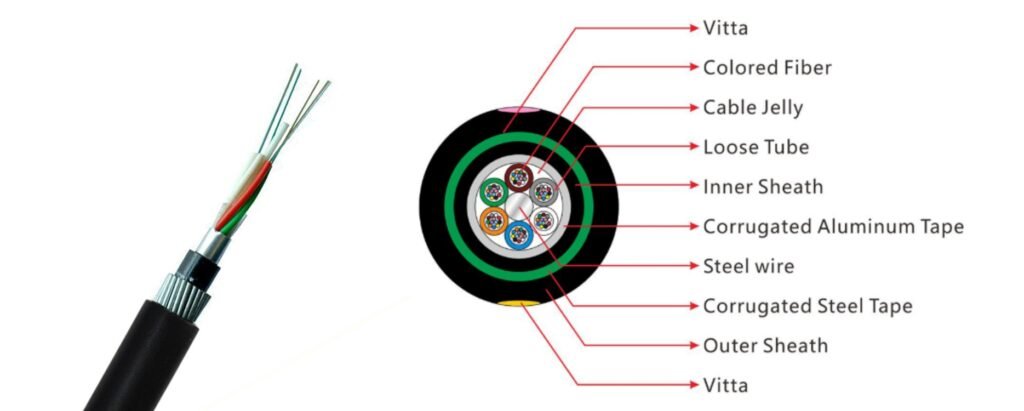
The cable structure provides strong mechanical protection against soil pressure, rodent activity and external impacts, making it suitable for underground communication networks.
Direct burial fiber cables like GYTA53 are widely used in rural broadband infrastructure, mining communication systems and industrial fiber deployments where additional durability is required.
What Is GYTA53 Fiber Optic Cable?
GYTA53 fiber optic cable is a double armored outdoor cable designed for underground direct burial installations.
The cable structure typically includes loose tube fibers, water blocking materials, steel tape armor and additional protective outer sheaths that improve mechanical durability in harsh environments.
Typical Applications of GYTA53 Cable
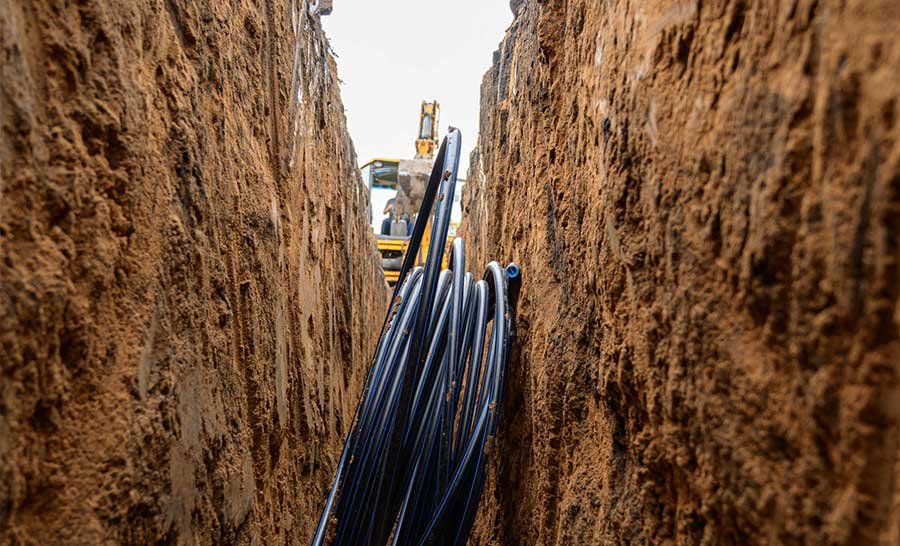
- Direct burial fiber optic networks
- Rural broadband infrastructure
- Mining communication systems
- Industrial facility fiber networks
- Long distance underground backbone routes
Fiber Cable for Mining Infrastructure
Mining communication systems often require underground fiber networks that can withstand harsh environmental conditions.
Double armored cables such as GYTA53 are commonly used in mining infrastructure because they provide strong mechanical protection and improved durability in demanding environments.
GYTA53 Cable Structure
Double Armored Cable Design
The GYTA53 cable structure uses multiple protective layers to ensure durability in underground environments.
The design improves resistance to soil pressure, moisture exposure and rodent damage during long term operation.
- Central strength member
- Loose tube fiber structure
- Water blocking materials
- Steel tape armor
- Double outer protective sheath
Advantages of Double Armored Fiber Cables
- High mechanical protection for underground installation
- Improved resistance to rodent damage
- Strong durability in harsh environments
- Suitable for long distance direct burial deployments
Engineering Considerations for Direct Burial Installation
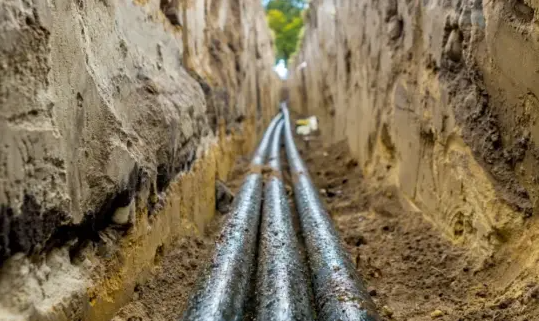
- Proper burial depth
- Soil conditions and pressure
- Rodent activity in the installation area
- Water exposure and drainage
FAQ
What is the difference between GYTA and GYTA53 fiber optic cables?
GYTA cables are typically installed inside underground ducts, while GYTA53 cables use a double armored structure designed for direct burial installations without ducts.
Is GYTA53 suitable for rodent resistant installations?
Yes. The double armored structure of GYTA53 cables provides improved mechanical protection and helps reduce the risk of damage from rodents in underground environments.
What environments are suitable for GYTA53 cables?
GYTA53 cables are commonly used in rural networks, mining infrastructure and industrial fiber deployments.
What fiber counts are available for GYTA53 cables?
GYTA53 fiber optic cables are available in multiple fiber counts, typically ranging from 12 fibers up to 144 fibers depending on network requirements.
Discuss Your Deployment Scenario
Selecting the correct underground fiber cable structure is critical for long term network reliability.
If your project involves direct burial fiber routes or challenging environmental conditions, our team can help review the requirements and recommend suitable cable configurations.