

FTTH drop fiber optic cables are designed for last-mile fiber deployments connecting distribution networks to individual homes or buildings.
These cables are widely used in FTTH rollout projects where lightweight structure, easy installation and stable fiber protection are required.
Typical Applications of FTTH Drop Cables
- Last-mile FTTH network connections
- Aerial drop installations from distribution boxes
- Building entry fiber connections
- Residential broadband network deployments
FTTH Drop Cable Structure
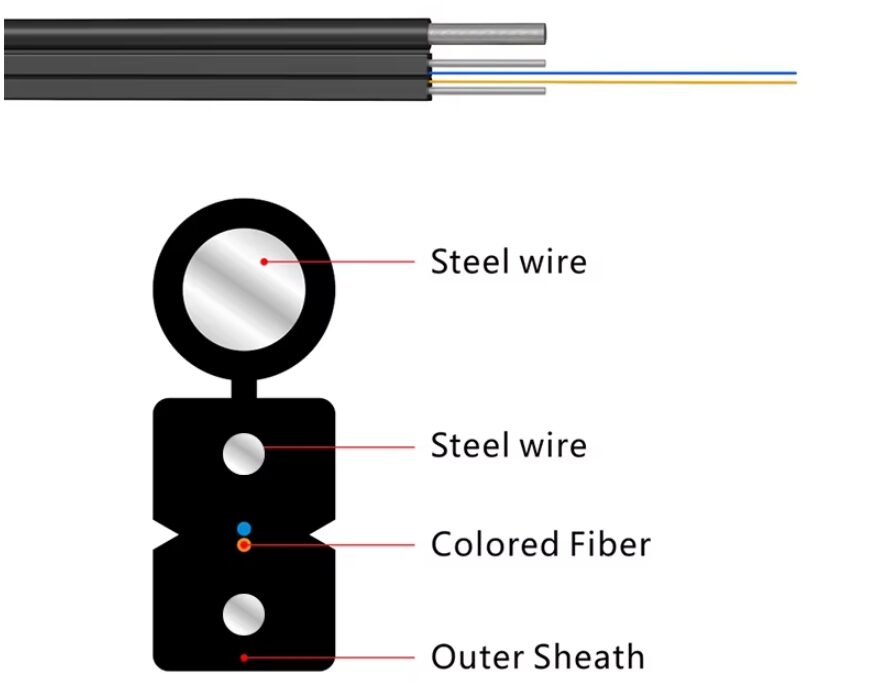
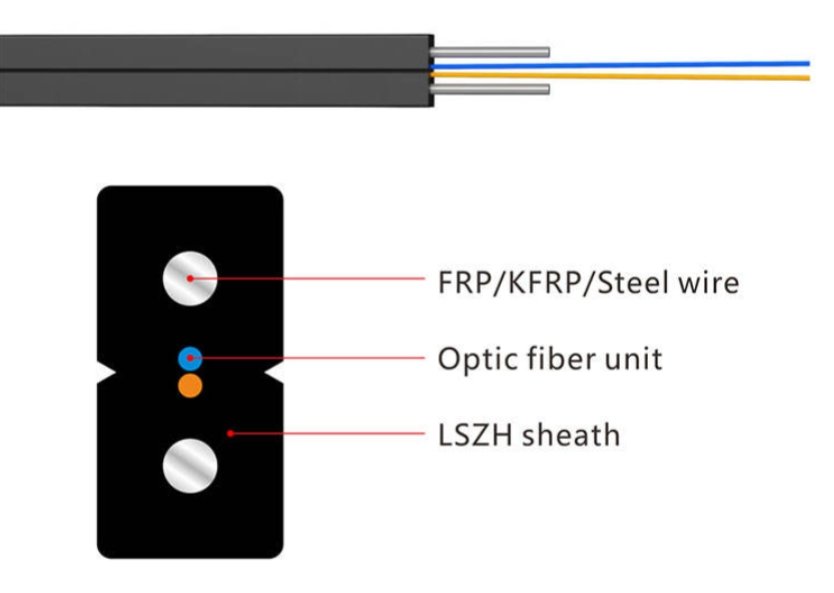
FTTH drop cables typically use a compact flat structure designed for easy routing and installation in residential environments.
The cable structure provides sufficient tensile strength for aerial drop installations while protecting optical fibers from bending and environmental exposure.
Key Structural Features
- Compact flat cable structure
- Reinforced strength members
- Weather-resistant outer sheath
- Designed for short-span aerial installations
Armored FTTH Drop Cable for Rodent-Prone Environments
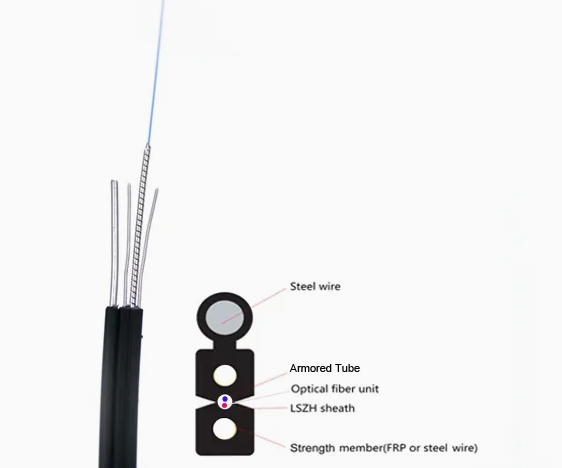
FTTH drop cables installed in rural or outdoor environments may be exposed to rodent damage, especially when routed along building walls, vegetation areas, or underground conduits.
In these scenarios, armored FTTH drop cable designs provide additional mechanical protection to improve long-term network reliability.
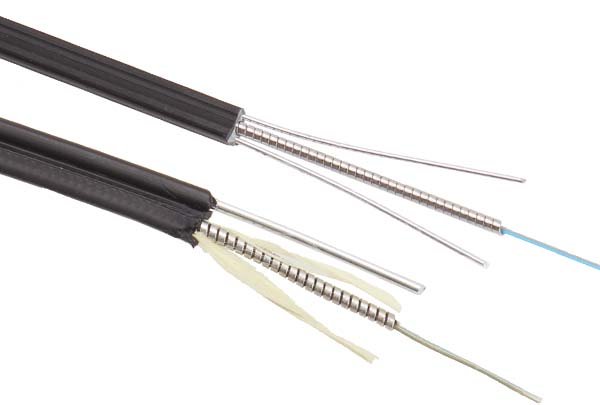
Typical armored drop cable structures include:
• Steel tape armored flat drop cable
• Steel wire reinforced drop cable
• Anti-rodent yarn reinforced drop cable
These structures protect the optical fibers from chewing damage while maintaining flexibility for last-mile installation.
Armored FTTH drop cables are commonly recommended for:
• Rural FTTH deployments
• Outdoor building entry routes
• Underground or conduit installations
• Agricultural environments
• Industrial sites with rodent exposure
Selecting armored drop cable designs helps reduce service interruptions and maintenance costs in high-risk environments.
Installation Considerations for FTTH Networks
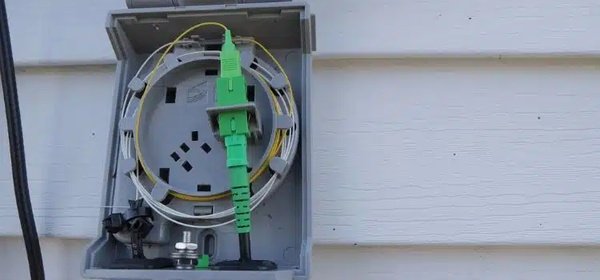
- Minimum bending radius during installation
- Cable routing through building entry points
- Protection against mechanical stress
- Compatibility with FTTH connectors and terminals
FAQ
What is an FTTH drop fiber optic cable?
FTTH drop fiber cables are used to connect fiber distribution networks to individual homes or buildings in fiber-to-the-home deployments.
Can FTTH drop cables be installed aerially?
Yes. FTTH drop cables are commonly installed as short aerial spans between distribution boxes and residential buildings.
What is the difference between drop cable and outdoor fiber cable?
Drop cables are designed for last-mile connections in FTTH networks, while outdoor fiber cables such as ADSS or GYTA are used for backbone and distribution networks.
What fiber types are used in FTTH drop cables?
FTTH drop cables typically use single-mode optical fibers suitable for broadband access networks.
Discuss Your FTTH Deployment
If you are planning an FTTH rollout project, selecting the right drop cable structure is important for installation efficiency and long-term network reliability.
Our team can help review deployment requirements and recommend suitable drop cable configurations.