
Common Design Decisions That Create Long-Term Problems
The network passed acceptance testing. Three years later, parts of it were being replaced.
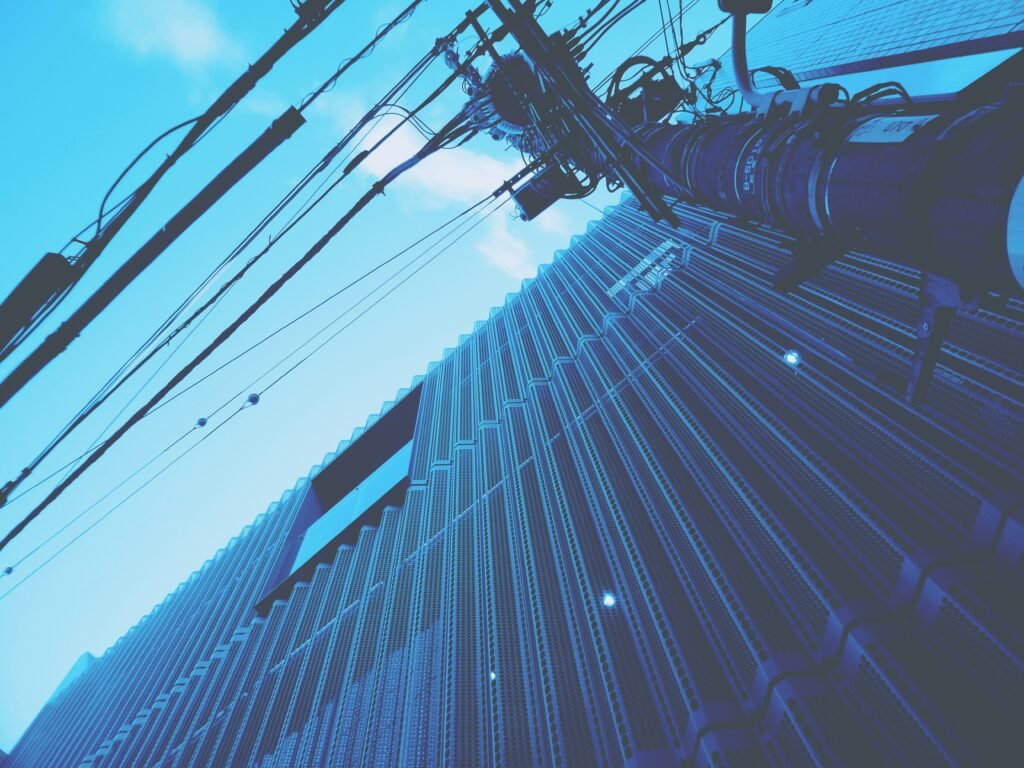
A regional ISP expanded its FTTH network into several suburban communities.
The project was completed on schedule.
Acceptance testing was successful.
Customer activation began immediately.
Everything appeared to be working exactly as planned.
Less than three years later, maintenance costs started rising.
Service calls became more frequent.
Several drop cable sections required replacement.
Some closures needed inspection.
The network still worked—but it was no longer operating as efficiently as expected.
Situations like this are more common than many people realize.
The difference between a network that performs reliably for ten years and one that requires significant maintenance after only a few years is rarely caused by a single failure.
More often, it is the result of dozens of decisions made during planning, material selection, and installation.
How Long Should an FTTH Network Last?
Passive FTTH infrastructure is generally expected to remain in service far longer than active equipment.
While OLTs, ONTs, and electronics may be upgraded several times during a network’s lifecycle, components such as:
- Feeder cables
- Distribution cables
- Drop cables
- Splice closures
- Pole hardware
- Anchoring accessories
are often expected to provide reliable service for 10–20 years or more when properly selected and installed.
When significant replacement work becomes necessary after only two or three years, there is usually an underlying engineering reason.
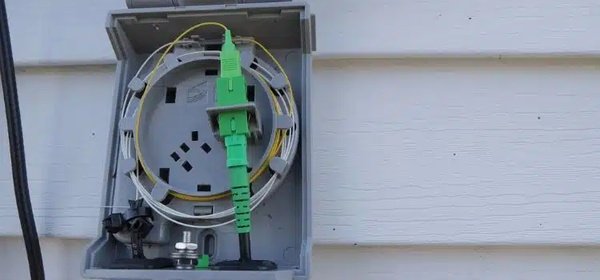
The Hidden Difference Between Day One and Year Three
Many projects are designed to pass acceptance testing.
Far fewer are designed to minimize maintenance costs over the next decade.
That difference matters.
A network can pass every commissioning test while still containing hidden weaknesses:
- Limited environmental protection
- Marginal hardware selection
- Excessive mechanical stress
- Inadequate future maintenance margins
These decisions rarely affect performance on Day One.
They often determine performance in Year Three.
1.Selecting Cable Based Only on Initial Purchase Price
Every project has a budget.
That is reality.
However, one of the most expensive mistakes in FTTH deployment is evaluating cable selection based only on purchase price.
A cable that saves a few cents per meter may eventually generate:
- Additional maintenance visits
- Customer complaints
- Premature replacements
- Higher operational costs
The lowest-cost option at procurement stage is not always the lowest-cost solution over the network’s lifetime.
Successful operators increasingly evaluate lifecycle cost rather than material cost alone.
2.Underestimating Environmental Exposure
Environmental conditions vary significantly between deployment regions.
A network that performs well in one location may age much faster in another.
Common long-term risks include:
UV Exposure
Extended sunlight can gradually degrade cable jackets that are not designed for prolonged outdoor exposure.
Rodent Activity
In some rural and suburban environments, rodent damage becomes a recurring maintenance issue.
High Humidity and Rainfall
Poorly sealed closures may allow moisture to enter over time.
Coastal Conditions
Salt-laden air can accelerate corrosion of metallic hardware and accessories.
The environment often determines network lifespan as much as the cable itself.
3.Choosing a Cable That Does Not Match the Installation Environment
One of the most common misconceptions in network design is that a stronger cable is always a better cable.
In practice, reliability comes from matching the cable to the installation environment.
Examples include:
| Deployment Condition | Common Solution |
|---|---|
| Standard Aerial Routes | ADSS Cable |
| Long Pole Spans | ADSS Designed for Higher Tensile Loads |
| Standard Duct Installation | GYTA |
| Direct Burial with Mechanical Risk | GYTA53 or Similar Armored Designs |
| Areas with Frequent Rodent Activity | Rodent-Resistant Jacket or Armored Designs |
The goal is not to select the strongest cable.
The goal is to select the most suitable cable for the actual operating conditions.
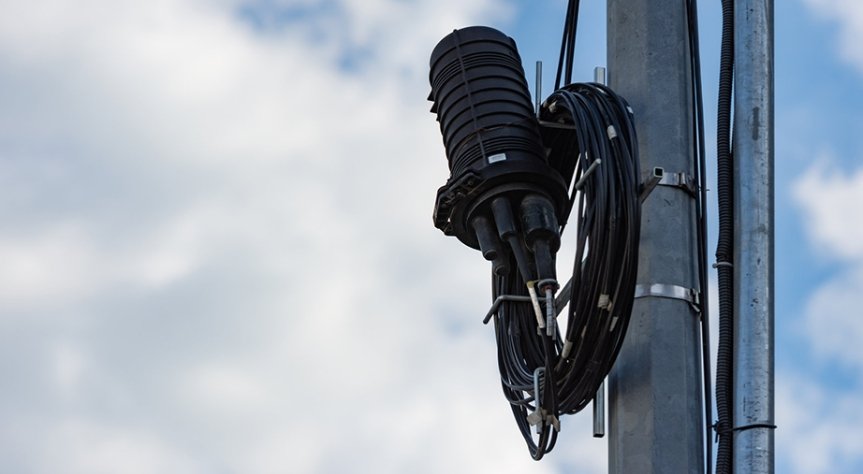
4.Closure Problems That Take Years to Appear
Many long-term FTTH failures originate at connection points rather than inside the cable itself.
Splice closures are responsible for protecting fibers against:
- Water ingress
- Dust contamination
- Temperature fluctuations
- Mechanical stress
A closure may pass inspection on installation day and still develop problems later if:
- Cable entries are not sealed correctly
- Internal fiber management is poor
- Environmental exposure was underestimated
Water rarely causes immediate failure.
More often, it creates gradual degradation that becomes visible months or years later.
5.Excessive Stress on the Last Segment of the Network
The final section between the distribution point and the subscriber often receives the most handling.
Drop cables may experience:
- Tight routing around corners
- Excessive pulling force
- Improper fastening methods
- Repeated maintenance activity
Ironically, many customer complaints originate from the shortest section of the network.
The feeder network may remain healthy while the final span becomes the primary maintenance burden.
6.Hardware That Doesn’t Match the Cable
Cable performance depends heavily on how the cable is supported.
Common examples include:
- Suspension clamps
- Anchoring clamps
- Pole brackets
- Fastening accessories
When hardware dimensions do not match cable specifications, stress can concentrate at specific points.
The network may pass initial testing.
Months later, attenuation increases or mechanical failures begin to appear.
In many investigations, the root cause is not the cable itself but the hardware surrounding it.
7.Designing for Installation Instead of Long-Term Operation
This is perhaps the most overlooked issue in FTTH deployment.
Some decisions make installation easier today.
Others reduce maintenance costs for years.
The two goals are not always the same.
Successful network operators evaluate questions such as:
- How difficult will maintenance be five years from now?
- What environmental conditions will affect this route?
- Which components are most likely to become future failure points?
- How much will a future service visit cost?
These questions often have a greater impact on total project cost than the original cable price.
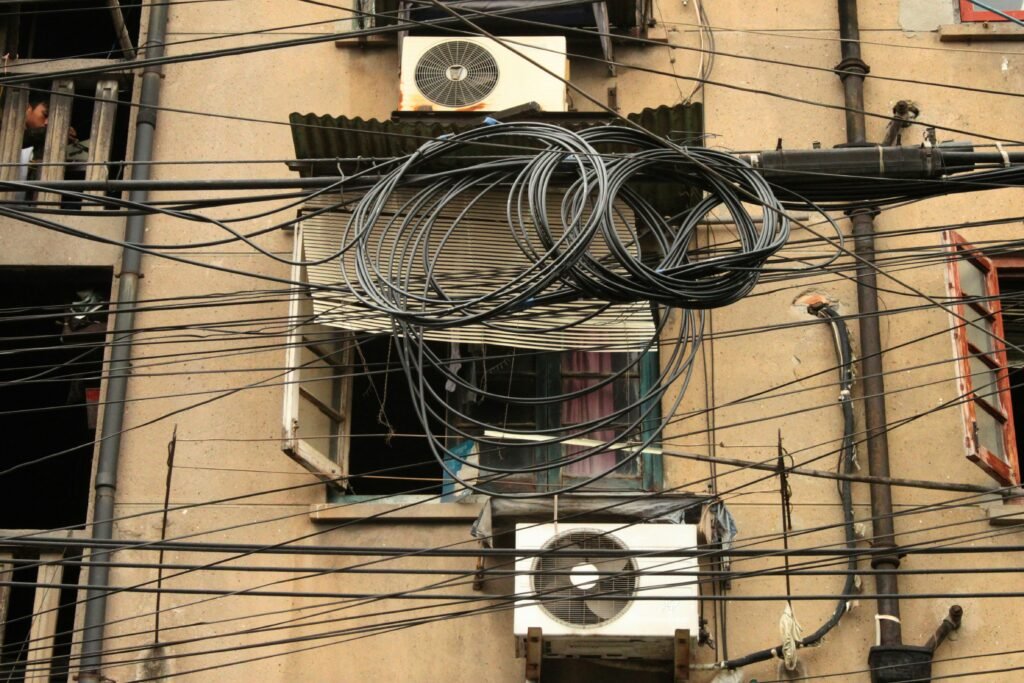
Before Selecting Fiber Cable, Ask These 3 Questions
Many premature network failures can be traced back to decisions made before construction even started.
1. What conditions will this cable face over the next 10 years?
Consider:
- UV exposure
- Humidity
- Rodent activity
- Temperature variation
- Coastal environments
2. Will maintenance access be simple or expensive?
A difficult-to-access route may justify higher initial investment in more durable components.
3. Is the lowest purchase price truly the lowest lifecycle cost?
Saving money during procurement can become expensive if replacement work is required a few
What Long-Lasting FTTH Networks Usually Have in Common
Projects that remain reliable for many years often share similar characteristics.
They focus on:
✓ Matching cable design to installation conditions
✓ Selecting closures suitable for the environment
✓ Protecting against moisture, UV exposure, and rodent damage
✓ Using hardware that matches cable specifications
✓ Evaluating lifecycle cost rather than purchase price alone
The objective is not simply to pass acceptance testing.
The objective is to reduce maintenance and maximize network reliability over the long term.
Frequently Asked Questions
How long should FTTH cables last?
Properly selected and installed FTTH cables are commonly expected to remain in service for 10–20 years or more, depending on environmental conditions and maintenance practices.
What causes FTTH networks to require replacement earlier than expected?
Common causes include incorrect cable selection, environmental exposure, moisture ingress, rodent damage, hardware mismatch, and excessive mechanical stress.
Are network failures usually caused by poor cable quality?
Not always. Many long-term failures are related to installation practices, environmental conditions, or component selection rather than manufacturing defects.
What is the biggest mistake in FTTH planning?
Focusing only on initial project cost without considering long-term maintenance and lifecycle performance.
Conclusion
Most FTTH networks do not fail because of a single catastrophic event.
More often, reliability declines because of small decisions made during planning, installation, and material selection.
A network that passes acceptance testing is not necessarily a network designed for long-term performance.
The most successful deployments are built around a simple principle:
Think beyond Day One. Design for Year Ten.
Because preventing a problem is almost always less expensive than repairing one later.
Planning an FTTH Deployment?
Choosing the right cable, closure, and hardware for your installation environment can significantly reduce future maintenance costs.
If you’re evaluating aerial, duct, direct-burial, or rodent-prone routes, we can help review your deployment conditions and recommend suitable solutions.
Contact CrownNetcom for a free FTTH Cable Selection Checklist and project-specific recommendations.